

Let me tell you a story today! – The Manji
Let me tell you a story today.
For emptying my mind, I am often scrolling through Instagram without paying much attention to the captions of videos or photos. Sometimes, however, single videos or photos catch my attention and I am reading the text and comments.
Recently, I saw something that really made me sad and which is, somehow, also connected to Japanese gardens. At least in a way.
I saw a video where an Italian artist was covering Nazi signs on walls with murals.
You know, I am from Germany and together with Italy and Japan we have an extremely problematic history. However, differently to Japan, every German child is heavily exposed to this historical heritage in school. If I remember right, I had to learn about WWII and the Nazi in at least two different subjects over four years or more, including visiting the remains of concentration/working camps.
But even I didn’t know one thing when I first visited Japan in 2006 which left me speechless at first.
The whole city maps were covered in what I thought was the Nazi sign!
Soon I learned though, that it wasn’t at all the Nazi sign but the original ancient sign used in Asia for thousands of years and which is actually a sign with a good meaning: the Buddhist leftist swastika!
On maps, temples in Japan are marked with this symbol and now I remember that even when I was a child, sightseeing spots in Sweden were marked with a swastika. The swastika was used all over the world in a positive way before the Nazi appropriated it!

In Hasedera, a temple in Kamakura, there even is a pond in the shape of the swastika.
(To draw the connection to Japanese gardens😉) In Japan, the symbol is called manji.

The swastika in Buddhism is assigned to Buddha and a sign for the Buddha-nature. It is a symbol for strength, endurance and durability.
The Nazi symbol is using the rightist swastika and turned it around 45 degrees.
It is called Hakenkreuz and in respect for the swastika and its use in many different countries, I think it should be called like this. In spoken language and also on Social Media.
It really made me sad seeing people referring to the Nazi symbol as swastika. Even when the sprayers were so stupid to do the Hakenkreuz wrongly and didn’t turn it 45 degrees. (It definitely was Nazi context because the SS symbol was found there too.)
The Hakenkreuz (and also swastika) shouldn’t be used in many countries, especially in Europe. It is even forbidden in some (for example Germany). And it is good when covered by happy murals or removed. However, since the original swastika is still in use in many countries, I think it would be better to differentiate between swastika and Hakenkreuz.
I hope that we still keep the education about the Nazi regime and the war up and alive and that people in the future will be aware about the difference in the Hakenkreuz and the swastika and will know that the Nazi appropriated this sign which is actually full of positive meaning!
It’s definitely a difficult and delicate topic. What do you think about it?
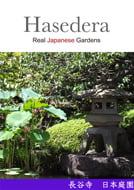
Hasedera in Kamakura
Secret Gardens
2019 – A modern dry landscape garden in Kamakura
Available as PDF
4.95$ Buy / Preview
Click for More Information
If you like what you see, support our Work on Patreon
click for more info

With twelve years of professional landscaping experience under her belt, Anika Ogusu is your perfect guide to the world of Japanese gardens. Her love of nature began early, in the woods near her childhood home and the garden of her grandmother’s house. During her teenage years she developed a strong interest in Japanese culture, and after university she decided to combine her love of Japan and gardens into a profession. Anika started her career as chief gardener in charge of the perennial valley at the Botanical Garden in Hamburg, Germany, then moved to Tokyo in pursuit of her dream. For two years she apprenticed under local landscape designers and learned the art of Japanese garden design, construction and maintenance. Now, in partnership with Real Japanese Gardens (www.japanesegardens.jp), her wish is to spread the magic of Japanese gardens to the rest of the world. Her in-depth guide books on gardens throughout Japan are available in eBook format or paperback. In her free time, Anika enjoys exploring her adopted country (especially green moss gardens), and soaking up nature and any details that interest her.
Support our Work on Patreon

Our Patrons are making our work possible and are the first to read!
With twelve years of professional landscaping experience under her belt, Anika Ogusu is your perfect guide to the world of Japanese gardens. Her love of nature began early, in the woods near her childhood home and the garden of her grandmother’s house. During her teenage years she developed a strong interest in Japanese culture, and after university she decided to combine her love of Japan and gardens into a profession. Anika started her career as chief gardener in charge of the perennial valley at the Botanical Garden in Hamburg, Germany, then moved to Tokyo in pursuit of her dream. For two years she apprenticed under local landscape designers and learned the art of Japanese garden design, construction and maintenance. Now, in partnership with Real Japanese Gardens (www.japanesegardens.jp), her wish is to spread the magic of Japanese gardens to the rest of the world. Her in-depth guide books on gardens throughout Japan are available in eBook format or paperback. In her free time, Anika enjoys exploring her adopted country (especially green moss gardens), and soaking up nature and any details that interest her.


No Comments on “Let me tell you a story today! – The Manji”
There are no comments yet.